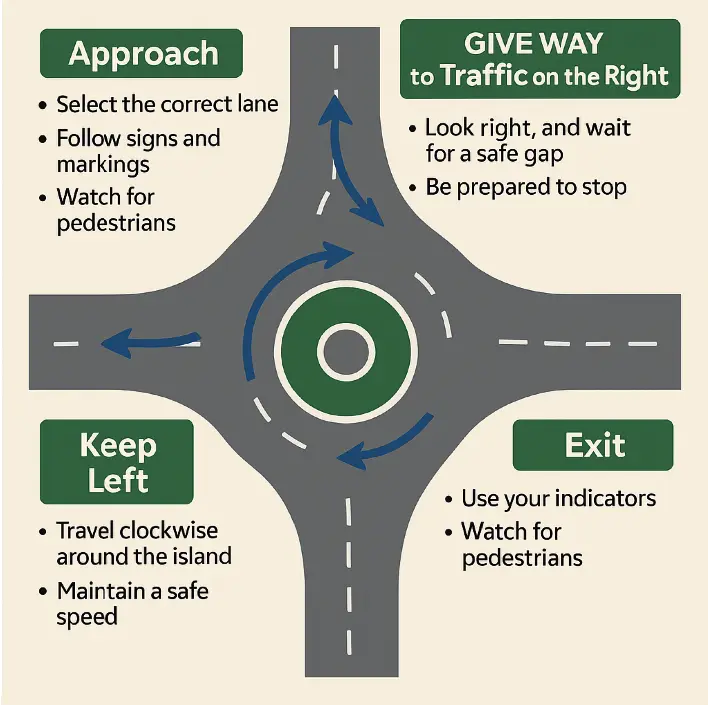
Understanding Roundabouts – A Simple Guide for Learners
What is a Roundabout?
A roundabout is a circular junction where traffic flows clockwise (UK). Vehicles already on the roundabout have priority.
The 3 Golden Rules:
1. Look Early
2. Decide Early
3. Go Only When Safe
Approach Routine: Use the MSPSL Method
M – Mirrors: Check interior and side mirrors
S – Signal: Signal according to your exit
P – Position: Get into the correct lane early
S – Speed: Slow down early so you can judge
L – Look: Look right (and ahead) for a safe gap
What to Look For at the Roundabout:
– Traffic coming from your right (they have priority)
– Gaps: a safe, steady space with enough time to join
– Signal and position from other cars
– Road markings, especially for multi-lane roundabouts
When to Go:
Go when:
– There’s a clear, safe gap from the right
– You can enter smoothly without forcing other drivers to brake or swerve
– You feel confident with your decision
Tip: If you’re unsure – wait. It’s safer to lose a few seconds than to rush into danger.
Common Mistakes to Avoid:
– Looking only ahead – always look right first
– Hesitating too long when it’s safe to go
– Rushing into a small gap
– Not signaling when exiting
Easy way to learn roundabout exits:
• Left (1sdencet): Signal left early, stay left
• Straight (2nd exit). No signal on approach, signal left after passing first exit
• Right or full circle signal right on approach signal left just before at your exit
Extra Tip for Nervous Drivers
Practice on mini roundabouts or quieter ones first. Build confidence before tackling big or busy roundabouts