Meeting situations in Driving
Meeting situations in Driving
What is the meeting situation?
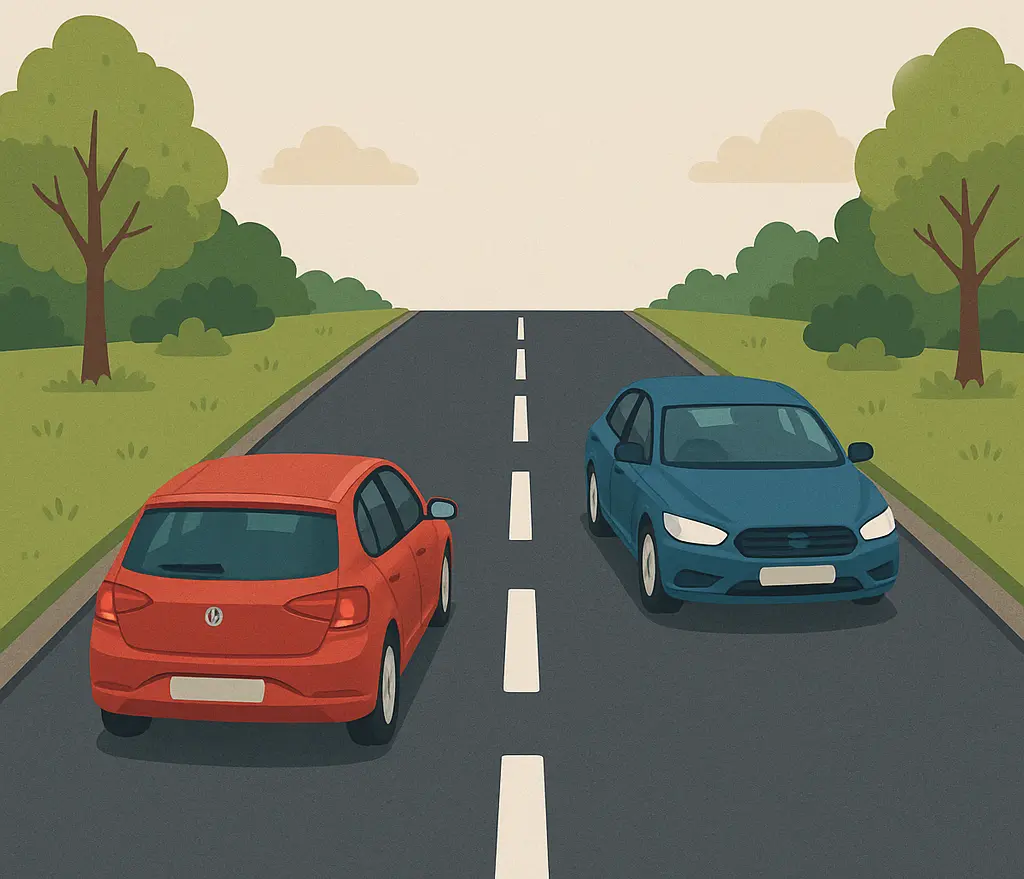
A meeting situation occurs when two vehicles are approaching each other from opposite directions on a road that is too narrow for both to pass safely at the same time
This is common on:
• Narrow residential streets • Country lanes • Roads with parked cars reducing the width
When Should You Stop?
• Give way to oncoming vehicles when your side of the road is obstructed. • If both sides are clear, but narrow, assess who has priority. • Stop before the narrowing – NOT in it. • If unsure, ALWAYS be the one to hold back.
What to Look For:
1. Obstructions on your side (parked cars, roadworks, bins). 2. Road width – is there space for two vehicles? 3. Oncoming vehicles’ position and speed. 4. Gaps for passing places – where can you or they pull in safely? 5. Signs and road markings – sometimes priority is marked.
Who Has Priority?
• If your side is blocked, you should give way.
• If the other side is blocked, they should give way.
• On country lanes, use passing places courteously.
• In situations where it is unclear, use eye contact, hand signals, and ALWAYS prioritise safety over ‘being right’.
Good Practice:
• Approach narrow roads at a slow, cautious speed.
• Keep scanning will head for oncoming vehicles or hazards.
• Use mirrors frequently to check behind.
• Be ready to reverse safely if needed.
• ALWAYS be courteous and PATIENT.
Common Mistakes to Avoid:
• Rushing into narrow gaps without assessing.
• Assuming the other driver will stop.
• Stopping in the middle of the road, causing a block.
• Not checking behind before reversing