Where to Look (and Where NOT to Look) When Driving
Where to Look (and Where NOT to Look) When Driving
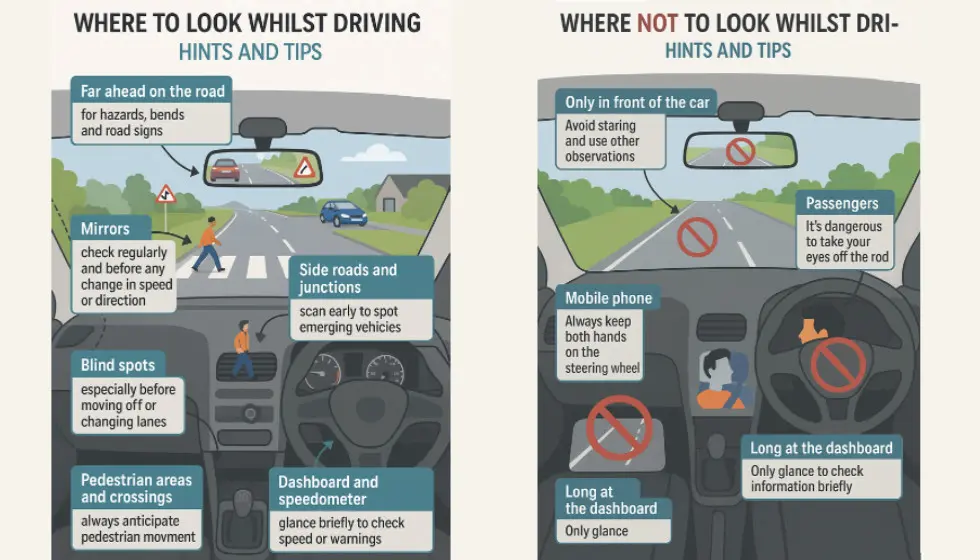
Where are You Should Look:
1. Far Ahead on the Road:
• Look well, I had to anticipate traffic lights, road signs, hazards and Bends.
• Aim to scan 12 to 15 seconds ahead at all times.
2. Mirrors Regularly and Strategically:
• Check your rearview and side mirrors every 5 to 8 seconds.
• Always check mirrors before changing speed, direction, or lanes.
3. Side, Roads and Junctions:
• Glance both ways before entering or crossing.
• Look early to plan your move and avoid last minute decisions.
4. Pedestrian Crossings and Pavements:
• Watch for people approaching crossings, or stepping into the road.
• Be especially cautious near schools and busy areas.
5. Blind spots:
• Always check your blind spots before merging, turning or moving off.
• Use a quick glance over the shoulder, not just your mirrors.
6. Traffic Signs and Road Markings:
• Read signs in advance to avoid sudden lane changes or missed turns.
• Look for temporary signs in construction zones.
7. Other Road Users, Especially Vulnerable Ones:
• Be aware of cyclists, motorcyclists and pedestrians.
• Look out for sudden movements or poor visibility.
Where NOT to Look When Driving:
1. At Your Phone or Any Screen:
• Even glancing away for two seconds, can cause a crash.
• Use hands-free systems, only when absolutely necessary.
2. To Close in Front of the Car:
• Don’t fixate on the car immediately in front of you.
• Look for the head to see what is coming and react smoothly.
3. At Yourself (e.g. mirrors for grooming):
• Adjust mirrors before driving not during.
• Avoid distractions like fixing her make up etc.
4. At Passengers While Talking: • Keep conversations short and focus on the road. • Use brief glances if needed, but keep eyes forward. 5. At Scenery or Distractions Outside: • Don’t get caught watching pedestrians, billboards or accidents. • Stay focused on your driving environment.
TIP:
Use the “SCAN, CHECK, MOVE” method:
Scan ahead, check mirrors and blind spots, then make your driving decision